The Artist’s Journal
The Emotion Behind the Abstract: How I Let Color Speak Without Words

Posted on: 23/06/2026
I’ll be honest with you—abstract art can be intimidating.
When you stand in front of a painting that doesn’t show a recognisable landscape, a flower, or a face, it’s natural to feel a little lost. Your first question might be: “What is it supposed to be?”
But here’s the truth I’ve learned after years of working with oil paint: abstract art isn’t about what it is. It’s about how it makes you feel.
For me, abstraction is the purest form of visual language. When I paint abstractly, I’m not trying to replicate the world around me. I’m trying to translate the world inside me—the emotions, the energy, the whispers that words can never quite capture. And color is my vocabulary.
Let me take you behind the canvas and show you how I let color speak without saying a single word.
Why I Turn to Abstraction
I love painting landscapes and florals. There’s a profound beauty in capturing the physical world—the curve of a petal, the glow of a sunset, the rhythm of a city skyline. But sometimes, reality feels too limiting.
Have you ever felt joy so intense it felt like a physical vibration? Or sadness so heavy it had a colour? Have you ever woken up with a mood you couldn’t name but could almost see?
That’s exactly when I reach for abstraction.
Abstract painting allows me to bypass the brain’s need for logic and go straight to the gut. It’s instinctual, raw, and deeply personal. I’m not telling you a story with characters and settings—I’m giving you a feeling, pure and unfiltered. And the amazing thing? That feeling becomes yours to interpret, own, and connect with in your own unique way.
My Color Vocabulary: How I Choose My Palette
I don’t choose my colours randomly. Every hue on my palette is a deliberate emotional choice, built on years of experimentation and intuition.
Here’s a glimpse into my personal colour dictionary:
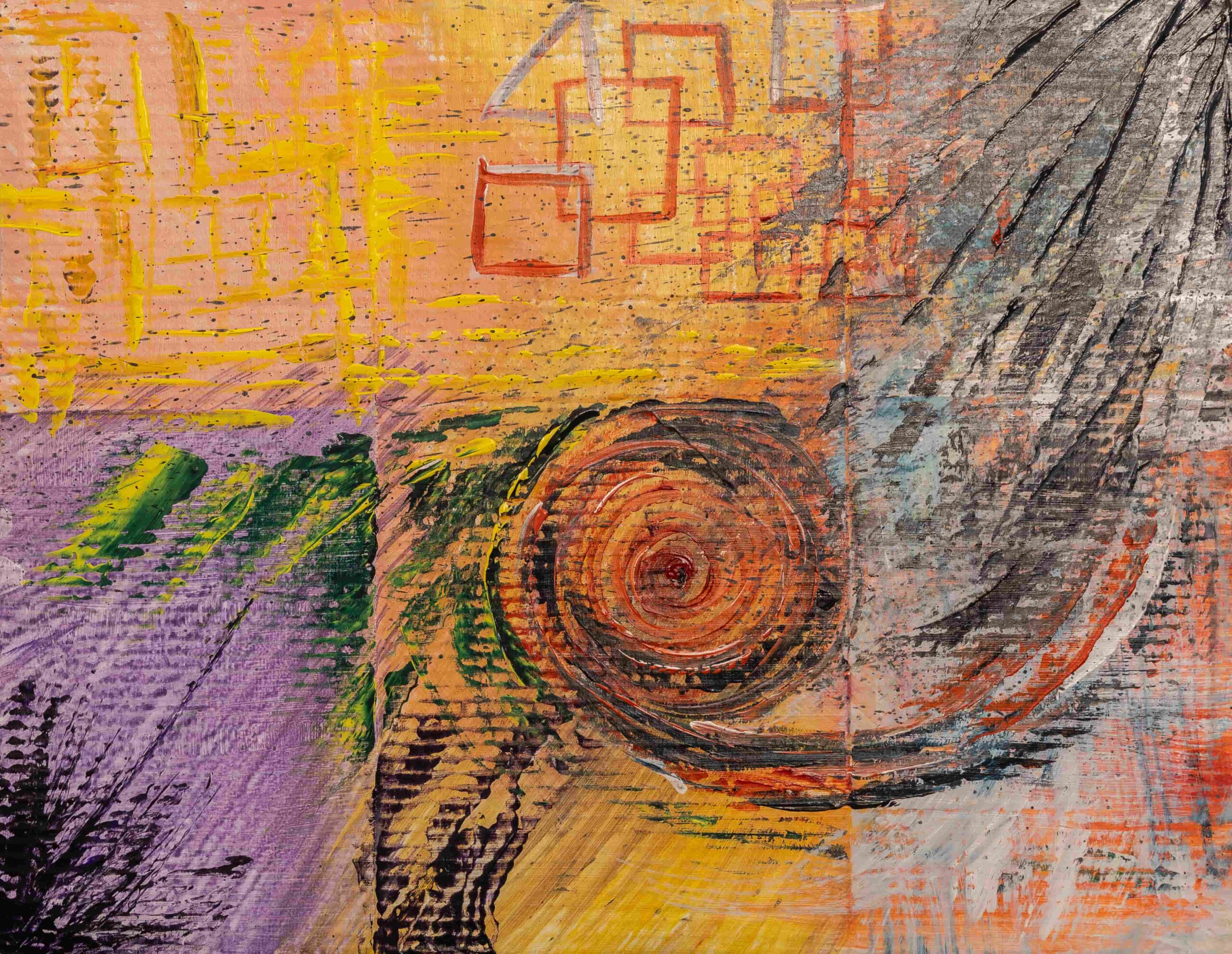
- Warm Reds & Oranges: These are my energy colours. They speak of passion, heat, urgency, and life itself. I use them when I want a painting to pulse with vitality—to grab you by the shoulders and say, “Feel this!”
- Deep Blues & Indigos: Calm, depth, introspection, and mystery. Blue is my go-to when I want to create space for thought—a visual breath. It invites you to pause, sink in, and reflect.
- Earthy Ochres & Umbers: Grounding, stability, and nostalgia. These colours root the painting, giving it a sense of history and warmth. They remind me of soil, aged wood, and the comfort of home.
- Bright Yellows & Greens: Optimism, growth, and light. These shades burst with hope and freshness. I reach for them when I want to capture the feeling of morning sunshine or the first shoots of spring.
- Ivory Black & Titanium White: The extremes. Black is the silence, the pause, the edge. White is the breath, the space, the possibility. Together, they create contrast and tension—the push and pull that makes a painting feel alive.
The Process: Painting with Instinct
When I begin an abstract piece—whether on a small archival board or a large stretched canvas—I rarely have a clear plan. I might start with a single colour that matches my mood that day. Maybe a sweep of deep crimson across the centre. Then I step back and listen.
What does this colour want? Does it need a companion? A contrast? A layer of something soft to balance its intensity?
This is the dialogue I have with the painting. I add a stroke of cool blue, and suddenly the red feels hotter. I scrape back a layer with my palette knife, and the surface gains texture and history. I glaze a wash of transparent yellow over a dark area, and the whole mood shifts from sombre to hopeful.
It’s a dance between intention and accident, control and surrender. I guide the painting, but I also let the painting guide me.
Some pieces come together in a single passionate session. Others take weeks—days of drying, followed by a single, decisive mark that finally makes everything click. Patience, I’ve learned, is just as important as inspiration.
Why You Should Love Abstract Art (Even If You Didn’t Think You Did)
Now, let’s talk about you. Why should abstract art earn a spot on your wall?
1. It Matches Your Mood, Not Your Decor.
Abstract art isn’t tied to a specific place or time. It doesn’t “go out of style” because it was never about style—it’s about emotion. That means it can move with you through different homes, different rooms, and different chapters of your life.
2. It’s a Conversation Starter.
When guests see an abstract painting on your wall, they will ask you what it means. And here’s the wonderful thing: there is no wrong answer. Your interpretation is just as valid as mine. That opens up a dialogue—about art, about feelings, about what we see in ourselves.
3. It’s the Ultimate Escape.
In a world full of screens, notifications, and information overload, abstract art offers a quiet retreat. It doesn’t demand you to “understand” it. It simply invites you to feel it. Staring into a layered, textured abstract piece can be genuinely meditative.
4. You’re Getting My Purest Self.
My representational paintings (the landscapes, the florals) show you what I see. My abstract paintings show you who I am. They’re vulnerable, unguarded, and deeply personal. When you buy an abstract original or print from me, you’re taking home a piece of my emotional landscape. And to me, that’s a profound connection.
The Bottom Line
I’ll let you in on a secret: I never “understand” my own abstract paintings completely. And that’s exactly the point. They are moments of pure feeling frozen in oil—capturing something that words could never quite reach.
So the next time you look at one of my abstract pieces, I invite you to stop asking “What is it?” and start asking “What do I feel?”
Because colour doesn’t need a dictionary. It already speaks your language.
Ready to explore my abstract collection? Browse my Abstract & Expressionist originals and prints here.